

Why plants?
Plants are at the heart of every biosolution we develop. They are our platform, our inspiration and our commitment to a sustainable future.
The power of plants
Plants are true natural bioreactors. They convert light into energy, require few resources to grow, capture carbon, and produce complex molecules with a minimal environmental footprint.
At Aramis, plants are not just a tool, but the driving force that generates innovation, transformation, and sustainability. We use plants as biosolution accelerators, capable of addressing the major challenges of health, agriculture, food, and a wide range of industries.
Understanding plant-based bioproduction
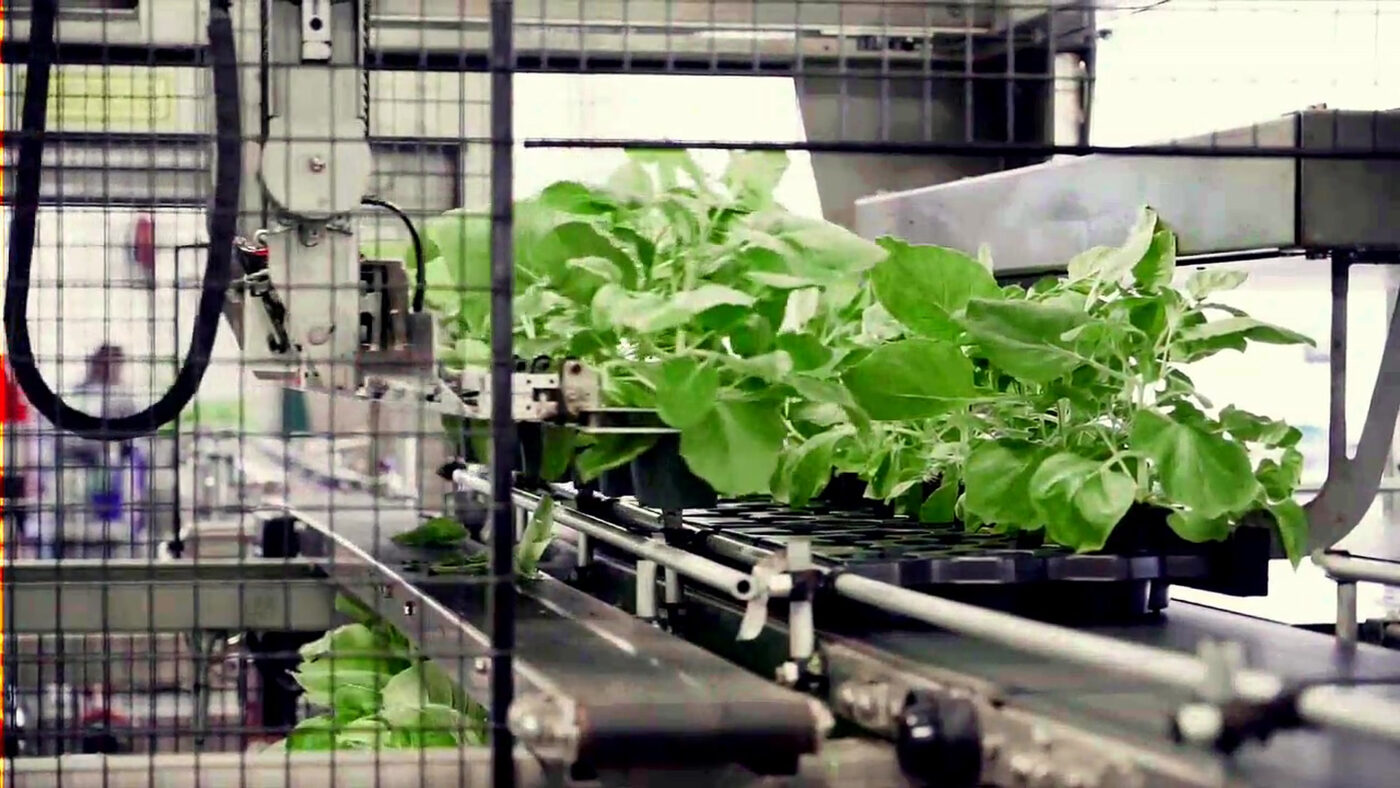
At the heart of our technology is an innovative approach that uses plant leaves to produce, in a transient and very rapid way, molecules of interest intended to preserve our health and make our daily lives more pleasant, healthier and more sustainable.
The biosolutions developed by Aramis can have a very concrete impact on daily life, from human health to agriculture. Thanks to plants, it becomes possible to rapidly produce vaccines and other complex biomolecules to prevent diseases, strengthen the protection of populations and improve access to essential health solutions. The same platform can also produce active ingredients for personal care, solutions that promote more resilient agriculture and more sustainable industrial processes. From the vaccine administered in the clinic to products used at home or in the field, Aramis is putting the power of plants at the service of biosolutions that are useful, accessible and adapted to real needs.
Doing more with plants
The next revolution in biosolutions will not only come from what we can imagine, but from what we are able to make. Aramis wants to be the plant-based platform that will make it happen.
Modern tools, and in particular artificial intelligence, allow us to imagine solutions that were still out of reach a few years ago. They help us to design proteins and metabolites that are more active, more stable and capable of responding to increasingly complex problems. The possibilities are multiplying. But a good idea or a promising molecule is not enough: it must also be able to produce it, quickly, on a large scale and at a cost adapted to its market. This is where the real challenge and opportunity for biosolutions now lies.
Plants are a production platform that is particularly suited to meet this challenge and turn the opportunity into reality.
They can make complex proteins quickly and allow the same platform to be used for very different applications. This flexibility opens the door to more biosolutions that would otherwise be too difficult or expensive to produce.


Doing more for the health of the planet
Producing in plants means benefiting from all the power of nature to do more with less.
Through low-carbon processes and responsible use of resources, we create the conditions for growth that combines innovation, economic performance and respect for the environment.